
The Autumn Equinox
Tuesday, September 22nd at 8:05 PM EDT
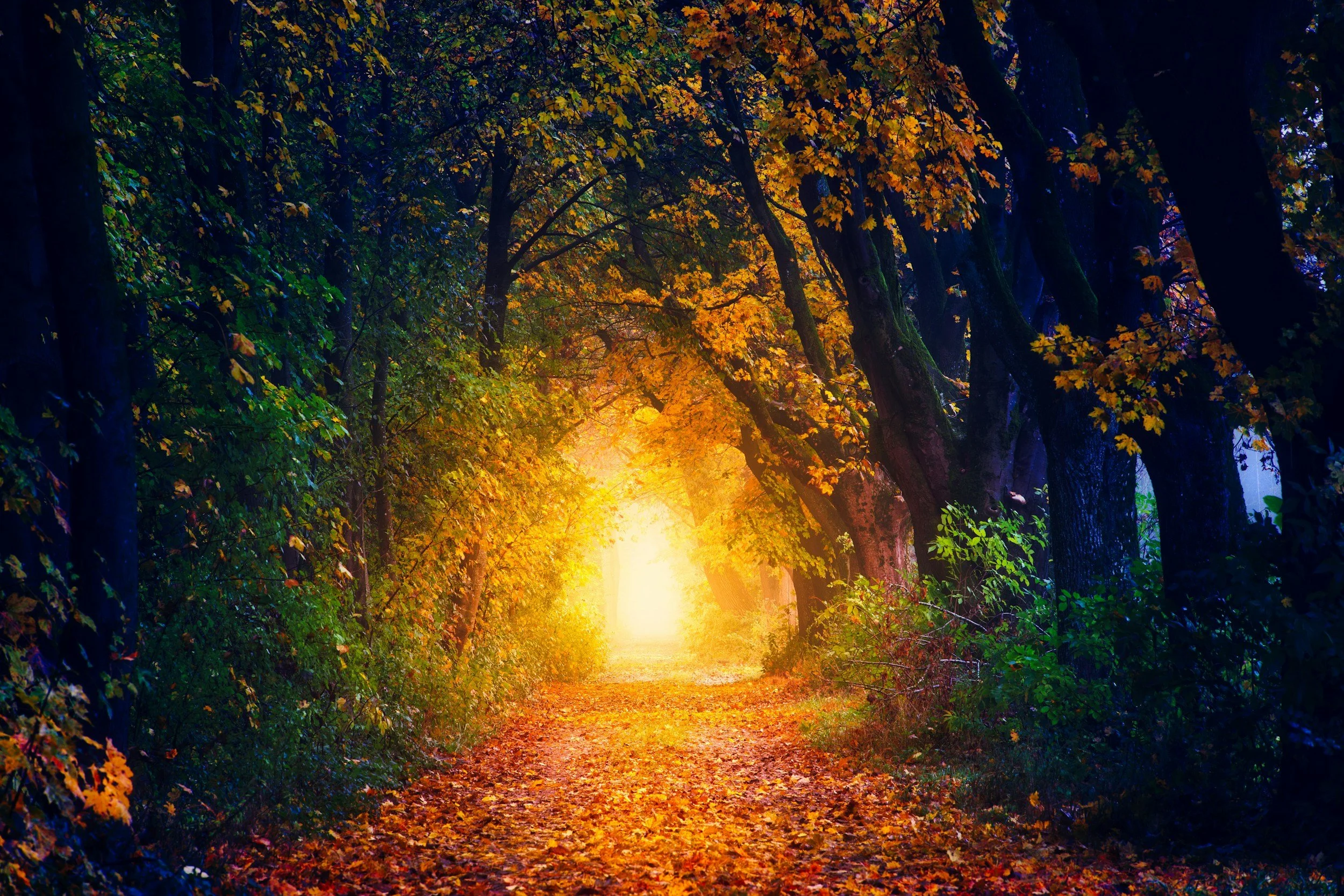
You have probably already felt it. The light in the evening goes amber earlier than it did a month ago, and there is a point around dinnertime when the day seems to change its mind. Nothing has happened yet on the calendar. Your body noticed anyway.
On the 22nd it becomes official. At 8:05 PM Eastern the Sun crosses the celestial equator heading south, the Sun enters Libra, and autumn begins. From that moment until March, the nights here are longer than the days.
On balance
The equinox gets described as a day of perfect balance, and that is close enough to true to be useful. Day and night come out nearly equal, and the Sun rises almost exactly due east and sets almost exactly due west. Strictly speaking the light wins by a few minutes, thanks to the way the atmosphere bends it around the horizon. Actual equal day and night arrives a few days later.
That small inaccuracy is worth keeping, because it says something honest about balance itself. It is a moment you pass through, not a state you achieve and then hold. The equinox is not asking you to arrange your life into perfect symmetry. It is marking a point where the scales tip, and inviting you to notice which way.
The second harvest
In the old agricultural wheel of the year, this is the second of three harvests. The first, at the start of August, was the grain. The third, at the end of October, is the one that closes the year. This middle one is the fruit harvest, the gathering-in, the point where you find out what the growing season actually produced.
That is the question underneath the season, and it is worth sitting with. Not what you intended to grow back in January, and not what you would grow if you started over. What is here now, in your hands, in September.
Some of that will be things you worked for. Some of it will be things that arrived without your involvement. Some of what grew was not what you planted, and part of an honest harvest is counting that too.
What your body is doing
The shift in light is not symbolic. Shorter days change melatonin timing, which changes sleep, which changes energy and mood. Many of us start feeling this in September and interpret it as a personal failure of discipline. You are more tired because there is less light. That is a physiological response, not a character flaw.
I see a particular pattern in my office this time of year: the part of us that ran at summer pace, and now wants to keep running at that pace through a season that is asking for something different. That part is not wrong to be worried. It usually learned somewhere that slowing down is unsafe. It just does not have current information about what this season requires.
Ways to mark it
Take the inventory. Write down what actually came in this year. Include the things that surprised you and the things that failed. A harvest count is not a performance review, and the goal is accuracy rather than a good grade.
Let the light in earlier. Fifteen minutes of morning light does more for the seasonal shift than most of what we try instead. It is unglamorous and it works.
Adjust one thing. Bedtime, the evening routine, when you eat. One adjustment made deliberately in late September tends to hold better than five made in November out of desperation.
Mark the moment if you want to. Light a candle at 8:05, or go outside and watch the sun set almost exactly due west. There is no correct ritual here. The point is having a place in time where you stopped and paid attention.
